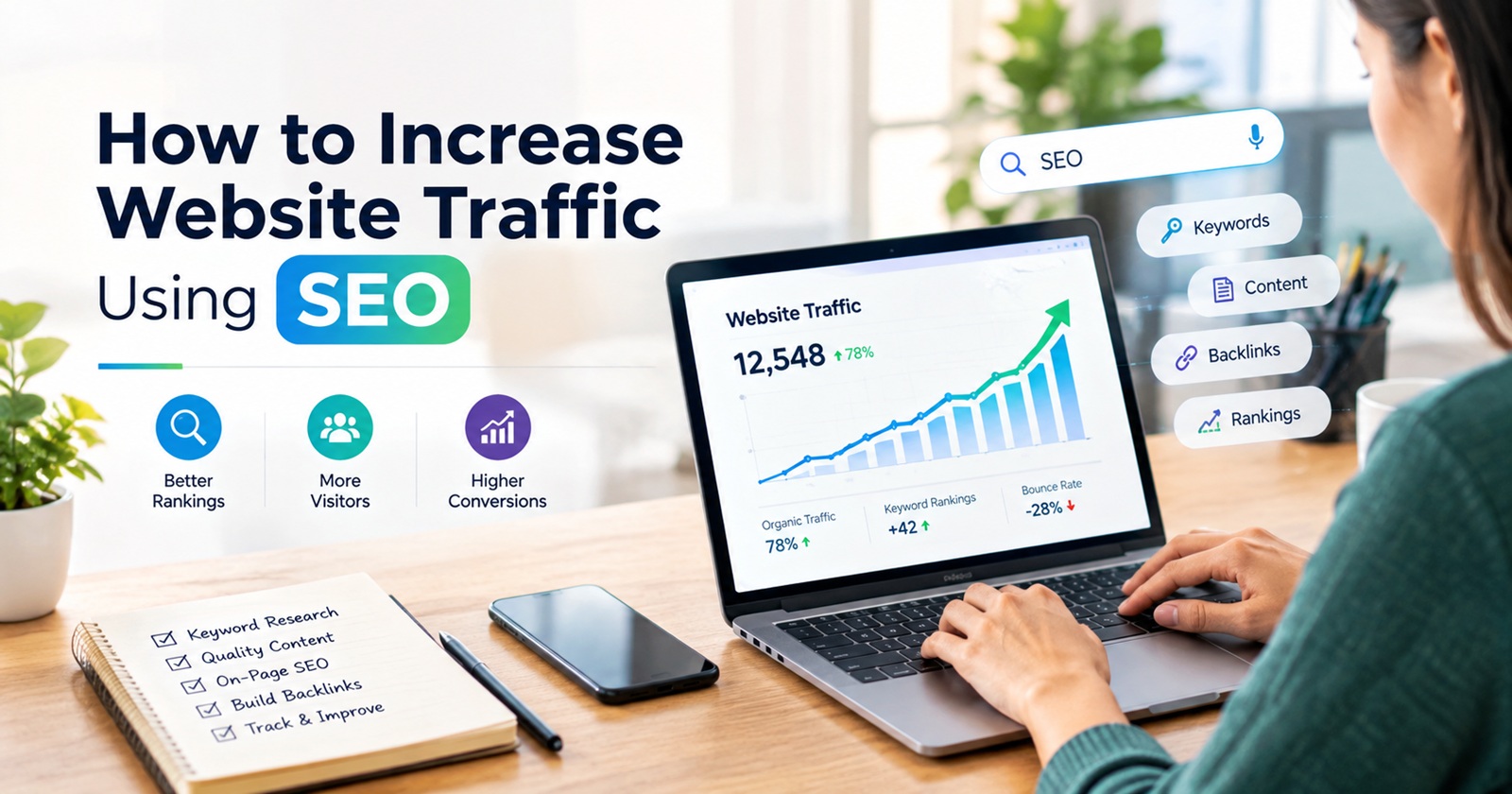
How to Increase Website Traffic Using SEO
You check your website analytics again. Same low number as last week. Same handful of visitors, most of whom leave within seconds.
Meanwhile, somehow, other websites in your exact space keep showing up on the first page of Google, pulling in visitors every single day without paying for a single ad.
The difference usually isn’t luck, and it isn’t a bigger budget either. It’s SEO search engine optimization done consistently, in the right order. Here’s how it actually works, in plain terms.
Why Website Traffic Doesn’t Grow on Its Own
A website doesn’t get visitors just because it exists. Search engines like Google need to understand what your pages are about, decide they’re useful, and trust them enough to show them to people searching for related things.
That process is what SEO is built around: helping search engines understand your website clearly, so they can match it with the right searches.
Start With Keyword Research
Before writing anything, figure out what your potential visitors are actually typing into Google. This is keyword research finding the exact words and phrases people use when looking for what you offer.
A common mistake is writing about what you want to say, rather than what people are actually searching for. If nobody searches for a phrase, ranking for it brings you nothing. Free tools can show you search volume and related terms, giving you a realistic starting point.
Fix Your On-Page SEO
On-page SEO means optimizing the actual content and structure of each page so both readers and search engines understand it clearly. This includes:
• A clear, descriptive page title that includes your main keyword
• Headings that are organized logically, not just bolded text
• A URL that’s short and readable, not a string of random characters
• Naturally placed keywords in the content, without stuffing them in awkwardly
• Fast-loading pages that work properly on mobile
None of this is complicated, but a lot of websites skip it entirely, which leaves easy visibility on the table.
Create Content That Actually Answers Questions
Search engines increasingly reward content that gives people a real, direct answer, not content written mainly to attract clicks. Think about the exact questions your audience has, then answer them clearly and completely.
This is where organic traffic really compounds. A single well-written page that thoroughly answers a common question can keep bringing in visitors for years, long after you’ve published it.
Build Off-Page SEO Through Genuine Links
Off-page SEO is mainly about other trustworthy websites linking back to yours. Search engines treat these links as a kind of vote of confidence the more relevant, genuine links you have, the more trust your website tends to earn.
This doesn’t mean buying random links in bulk, which can actually hurt you. It means creating content worth linking to, and building genuine relationships with other websites and creators in your space.
Pay Attention to Technical SEO
Technical SEO covers the behind-the-scenes health of your website things like page loading speed, mobile-friendliness, secure connections, and making sure search engines can actually crawl and index your pages properly.
You don’t need to become a developer to understand this. But if your website is slow, broken on mobile, or has pages search engines can’t access, no amount of good content will fully make up for it.
Track Your Google Rankings and Traffic
SEO isn’t something you do once and forget. Keep an eye on which pages are ranking, for which keywords, and how your organic traffic is trending over time.
This tells you what’s actually working, what needs improvement, and where there might be new opportunities you haven’t targeted yet.
Be Patient, But Stay Consistent
SEO doesn’t bring overnight results. It usually takes a few months of consistent effort before you see meaningful movement in your rankings and traffic. But unlike paid ads, that traffic doesn’t disappear the moment you stop spending money it keeps working for you.
The websites that win at SEO over time are rarely the ones doing something extraordinary. They’re the ones that stay consistent with the basics, month after month.
Frequently Asked Questions
Q1. How long does SEO take to increase website traffic? Most websites start seeing noticeable movement within three to six months of consistent effort, though this varies based on competition, website age, and how much content and optimization work has already been done.
Q2. Is SEO better than paid ads for increasing traffic? They serve different purposes. Paid ads bring quick, immediate traffic but stop the moment you stop paying. SEO takes longer to build but keeps bringing in organic traffic without an ongoing ad spend. Many websites benefit from using both together.
Q3. What is the fastest way to increase organic traffic? There’s no true shortcut, but improving existing content that’s already ranking on page two or three of Google, fixing technical issues, and building a few genuine backlinks tend to show results faster than starting from scratch.
Q4. Do I need to hire an SEO expert to increase website traffic? Not necessarily. Many of the basics solid keyword research, well-structured content, and fixing technical issues can be learned and applied by a website owner directly. An seo expert becomes more useful once you’re trying to compete in a highly competitive space or scale up significantly.
Final Thought
Increasing website traffic through SEO isn’t about finding a secret trick. It’s about understanding what your audience is searching for, building content that genuinely answers it, and making sure your website is technically sound enough for search engines to reward it. Do that consistently, and the traffic follows.